Gantry cranes are essential lifting solutions used across warehouses, workshops, shipyards, precast concrete plants, and container handling terminals. However, not all gantry cranes are built for the same level of performance. One of the most important distinctions when selecting a crane is whether it falls into the light duty or heavy duty category.
Although both types share the basic structure of legs, a bridge, hoist, and trolley, their specifications differ significantly in terms of load capacity, span, lifting height, operating speed, power system, structural design, wheel group design, and work duty classification. Understanding these differences helps buyers choose the correct crane for their working environment, operational frequency, and safety requirements.
This article provides a detailed comparison of light duty vs. heavy duty gantry crane specifications and explains how these differences affect performance, investment cost, and application suitability.
1. Load Capacity and Lifting Requirements
Light Duty Gantry Cranes
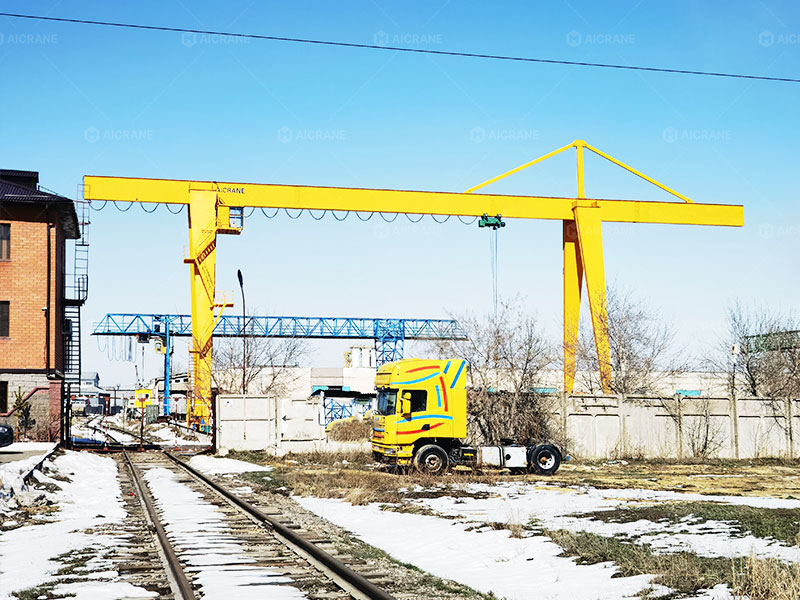
Light duty gantry cranes typically cover load capacities from 0.5 ton to 15 tons, with common models including 1 ton, 2 ton, 5 ton, 10 ton, and 15 ton gantry crane designs. These cranes are ideal for:
-
Small workshops
-
Light manufacturing tasks
-
Maintenance operations
-
Occasional or intermittent lifting
Because their lifting requirements are relatively low, the hoist motor, lifting gearbox, and wire rope are designed for moderate duty cycles.
Heavy Duty Gantry Cranes
Heavy duty gantry cranes start from 20 tons and extend to 500 tons or more, depending on industrial requirements. Popular capacities include 20 ton, 30 ton, 40 ton, 50 ton, 100 ton, 200 ton, and even 500 ton gantry crane models. These are commonly used in:
-
Steel mills
-
Power plants
-
Shipyards
-
Precast concrete production
-
Large logistics yards
Their hoisting mechanisms feature high-strength motors, multi-sheave wire rope systems, and robust drum designs to support continuous heavy lifting.
Key Difference:
Light duty cranes are designed for small to medium loads and infrequent operations, while heavy duty cranes handle much larger loads and operate more frequently under tough working conditions.
2. Structural Design and Materials
Light Duty Gantry Cranes
The structural frame is generally simpler and lighter. For many light duty models:
-
Single girder design is most common.
-
Box-type or truss-type structures reduce overall cost and weight.
-
Smaller wheel groups and bearings reduce friction and maintenance needs.
Mobile rubber tyred light gantry cranes (portable gantry cranes) may even be assembled from lightweight steel or aluminum for ease of movement.
Heavy Duty Gantry Cranes
Heavy duty models feature significantly strengthened structures:
-
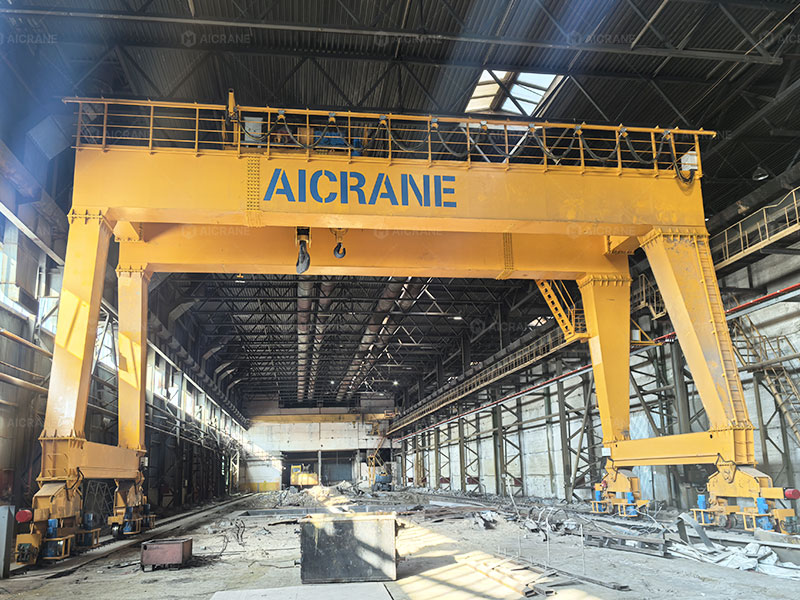
Double girder design is standard for stability and strength.
-
Thick steel plates (often Q235B or Q345B, depending on local standards).
-
Reinforced end carriages and heavy-duty wheel groups with large-diameter wheels.
-
Stronger welds, deeper beams, and greater structural rigidity.
These cranes are engineered to withstand repeated heavy lifting, dynamic load impact, and harsh outdoor conditions.
Key Difference:
Light duty cranes prioritize mobility and cost efficiency, whereas heavy duty industrial gantry cranes prioritize structural strength, fatigue resistance, and long service life.
3. Span and Lifting Height Specifications
Light Duty Gantry Cranes
Light duty cranes usually operate in small facilities or confined spaces. Their typical span ranges from:
-
4m to 20m, depending on workshop size
-
Lifting height from 3m to 12m
Because they are often used indoors or in small yards, the lifting height and span requirements are lower.
Heavy Duty Gantry Cranes
Heavy duty gantry cranes serve large industrial yards or large factories. Their specifications often include:
-
Span from 18m to 35m, or customized up to 50m
-
Lifting height from 10m to 30m
-
Large cantilevers for rail car loading or material stockpile access
These larger dimensions allow them to handle oversized or long materials such as steel beams, concrete beams, and ship components.
Key Difference:
Heavy duty gantry cranes offer far larger spans and lifting heights to accommodate industrial-scale operations.
4. Operating Speeds and Motor Performance
Light Duty Gantry Cranes
Typical working speeds:
-
Lifting speed: 2–8 m/min
-
Trolley travel: 10–20 m/min
-
Crane travel: 10–30 m/min
The motors are usually small to medium sized, focusing on energy efficiency and low noise.
Heavy Duty Gantry Cranes
Heavy duty cranes require stronger drives to handle high-capacity loads:
-
Lifting speed: 3–12 m/min (variable frequency available)
-
Trolley travel: 20–40 m/min
-
Crane travel: 30–50 m/min
Many industrial applications require frequency conversion control for precise movement, anti-sway performance, and safe handling of heavy or long loads.
Key Difference:
Heavy duty gantry cranes use more powerful motors and higher operating speeds to maximize productivity under continuous service.
5. Work Duty and Operation Frequency
Work duty classification is a primary differentiator.
Light Duty Gantry Cranes
Most light duty cranes fall under:
-
A2–A4 duty rating
-
Suitable for low to moderate usage
-
Best for maintenance tasks or light production work
Heavy Duty Gantry Cranes
Heavy duty cranes are rated:
-
A5–A7 duty class
-
Designed for frequent, continuous operations
-
Able to handle harsh conditions, outdoor environments, and heavy cycles
Steel mills and precast factories often require A6/A7 to guarantee long-term reliability.
Key Difference:
Heavy duty cranes support higher work duty classifications, reflecting their ability to function under continuous heavy loads.
6. Power Supply Methods
Light Duty Gantry Cranes
Common power systems include:
-
Cable drum
-
Festoon cable
-
Simple plug-in power (for portable gantries)
-
Battery power for small mobile gantry cranes
Energy usage is generally minimal.
Heavy Duty Gantry Cranes
Due to large power demand, heavy duty cranes require:
-
Busbar power supply (often 3-phase)
-
High-capacity cable reels
-
Hydraulic or hybrid drives for specific RTG models
-
Backup safety power systems
These systems must support the continuous motion and heavy load cycles.
7. Safety and Control Systems
Light Duty Gantry Cranes
Standard safety features include:
-
Overload limiter
-
Emergency stop
-
Limit switches
-
Basic brake system
-
Remote control or pendant control
Heavy Duty Gantry Cranes
With higher risks, heavy duty cranes incorporate advanced systems:
-
Anti-sway technology
-
Load monitoring systems
-
Automatic spreader systems (for container gantry cranes)
-
Windproof devices for outdoor use
-
Rail clamps and storm locks
-
Collision avoidance systems
-
Full cab control system
Key Difference:
Heavy duty cranes require more advanced safety protections due to large loads and complex lifting tasks.
8. Applications and Working Environment
Light Duty Gantry Cranes
Common industries:
-
Small warehouses
-
Light manufacturing
-
Repair and maintenance workshops
-
Machinery assembly lines
-
Mold handling and small steel part lifting
Heavy Duty Gantry Cranes
Suitable for:
-
Ports and container terminals
-
Heavy manufacturing
-
Steel plants
-
Concrete beam yards
-
Shipbuilding
-
Mining and power stations
Key Difference:
The operating environment directly shapes the crane’s load capacity, structure, and control system.
Conclusion
The differences between light duty and heavy duty gantry crane specifications extend beyond load capacity. They influence:
-
Structural design
-
Span and height
-
Motor power
-
Operating speeds
-
Work duty class
-
Safety features
-
Power systems
-
Suitable applications
For small workshops and occasional lifting tasks, light duty gantry cranes offer affordability, flexibility, and ease of installation. For continuous heavy lifting in large and demanding industrial environments, heavy duty gantry cranes provide unparalleled strength, durability, and operational efficiency.
Understanding these specification differences ensures buyers select the right equipment that balances performance, investment cost, and long-term reliability.